
Tyre Tread Patterns: What They Say About Your Driving Needs

Understanding tyre tread patterns is crucial for optimising vehicle performance and safety. Different patterns cater to various driving conditions, affecting grip, handling, and the tyre’s ability to disperse water. This post will explore the significance of tyre tread patterns and how they align with your driving needs.
What are Tyre Tread Patterns?
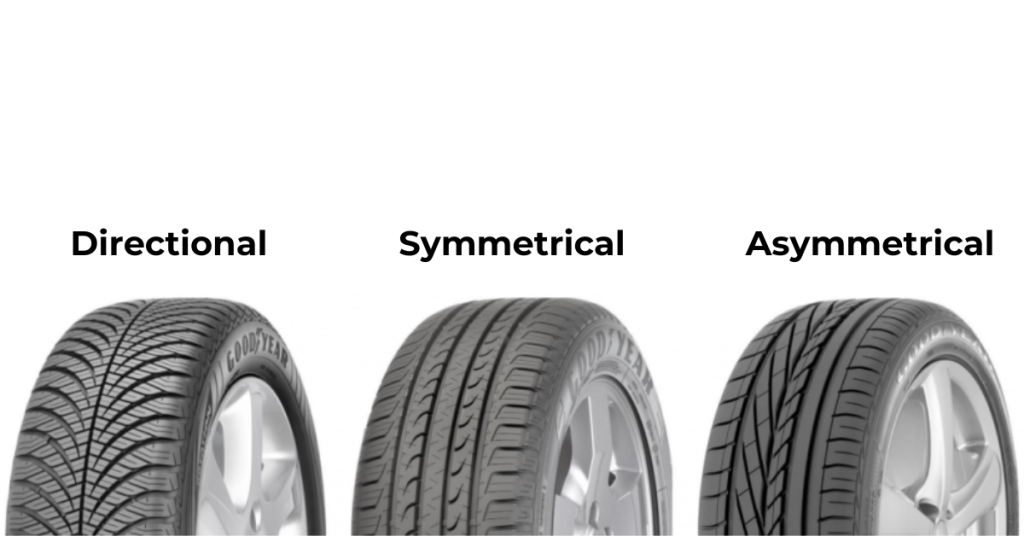
Tyre tread patterns are the grooved designs on the tyre’s surface that make direct contact with the road. They play a vital role in your vehicle’s traction, fuel efficiency, and overall safety. There are three main types of tyre tread patterns: symmetrical, asymmetrical, and directional.
What Is the Legal Tyre Tread Depth and How Huge the Fine Is in the UK?
In the UK, the legal minimum tyre tread depth is 1.6mm across the central three-quarters of the tyre and around its entire circumference. Driving on tyres below this limit can result in fines of up to £2,500 and three penalty points per tyre. Therefore, it’s essential to regularly check your tyres to ensure they comply with the law and maintain vehicle safety.
How to Check Tyre Tread Depth – The 20p Test
Checking your tyre tread depth is simple with the 20p test. Insert a 20p coin into the tread grooves at various points across the tyre. If the outer band of the coin is obscured when inserted, your tyres are above the legal minimum tread depth. If the outer band is visible, your tyres may be dangerously worn and possibly illegal.
Symmetrical Tread Patterns
Pros:
- Offer a quiet and comfortable ride.
- Typically have a longer lifespan due to even wear.
- Ideal for passenger vehicles in mild to moderate weather conditions.
Cons:
- Not optimised for extreme weather conditions.
- May offer less grip in wet or slippery conditions compared to other patterns.
Asymmetrical Tread Patterns
Pros:
- Provide excellent grip and handling on both wet and dry surfaces.
- Suitable for high-performance vehicles.
- Offer versatility in different weather conditions.
Cons:
- Can be more expensive than symmetrical tyres.
- Require proper orientation during installation.
Directional Tread Patterns
Pros:
- Exceptional performance in wet conditions, reducing the risk of aquaplaning.
- Designed for high-speed stability and performance.
- Efficiently expels water and slush from the tyre.
Cons:
- Limited rotation options, which can affect tyre wear over time.
- Often more specialised, making them suitable for specific vehicles or conditions.
Choosing the Right Tread Pattern for Your Needs
Selecting the correct tyre tread pattern depends on your typical driving conditions, vehicle type, and performance expectations. Consider the following:
- Climate: If you live in an area with heavy rain or snow, directional or asymmetrical treads may offer better safety and performance.
- Vehicle Type: High-performance vehicles benefit from the grip and handling of asymmetrical treads.
- Driving Habits: For long, quiet drives, symmetrical treads provide comfort and longevity.
Conclusion
Tyre tread patterns significantly influence your driving experience, safety, and vehicle’s handling. By understanding the different types and their advantages, you can make informed decisions that enhance your driving satisfaction and safety. Always consult with a tyre professional to select the best tyres for your specific needs, ensuring optimal performance and longevity.